Lars Schmitt · 21 October 2026
Examining Emergency Response Training Protocols Among Staff at Major Music Gatherings and Their Effects on Attendee Outcomes
Major music gatherings draw thousands of attendees each year and require structured emergency response training for staff to manage medical incidents, crowd surges, and weather-related disruptions effectively. Organizers implement protocols that combine first aid certification, crowd management simulations, adn coordination with local emergency services, while data from various events shows measurable differences in attendee outcomes when training intensity increases.
Core Components of Staff Training Programs
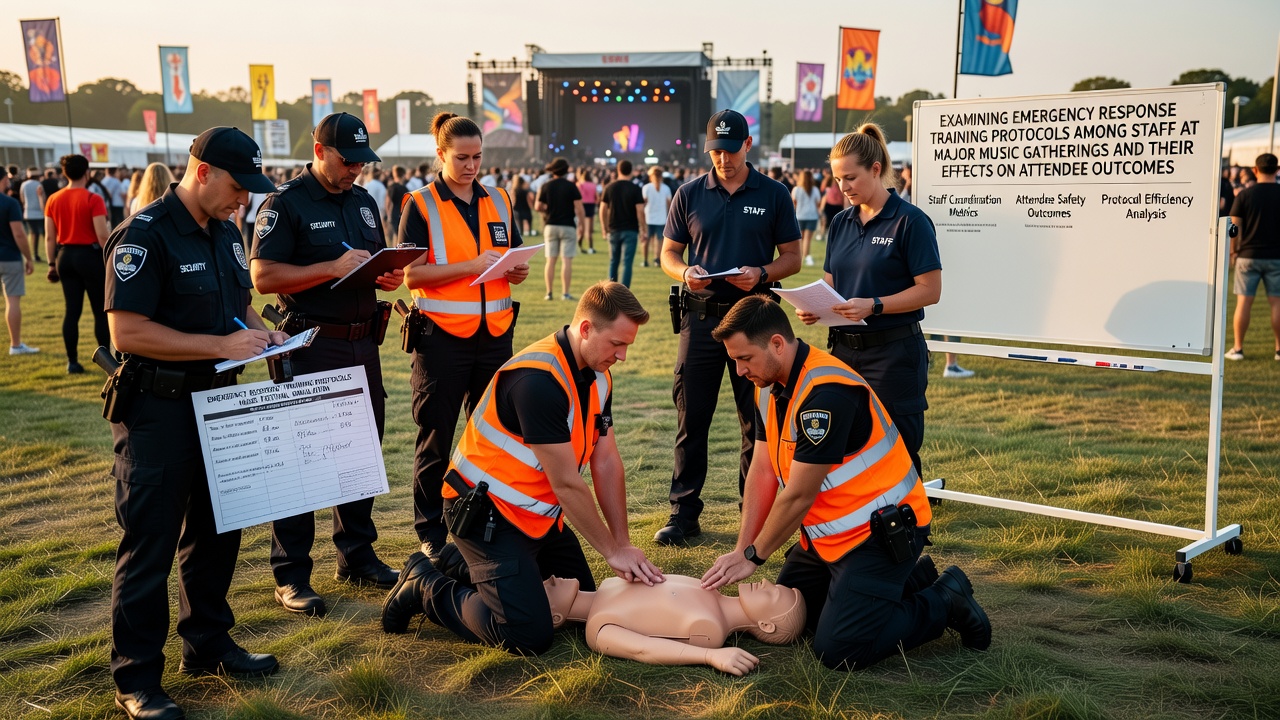
Training typically covers basic life support, automated external defibrillator use, and de-escalation techniques, with many festivals requiring annual recertification for security and medical teams. Researchers at institutions tracking mass gatherings note that programs incorporating scenario-based drills produce faster response times compared to classroom-only instruction, and staff who complete these sessions handle heat-related illnesses or substance-related emergencies with greater consistency across shifts.
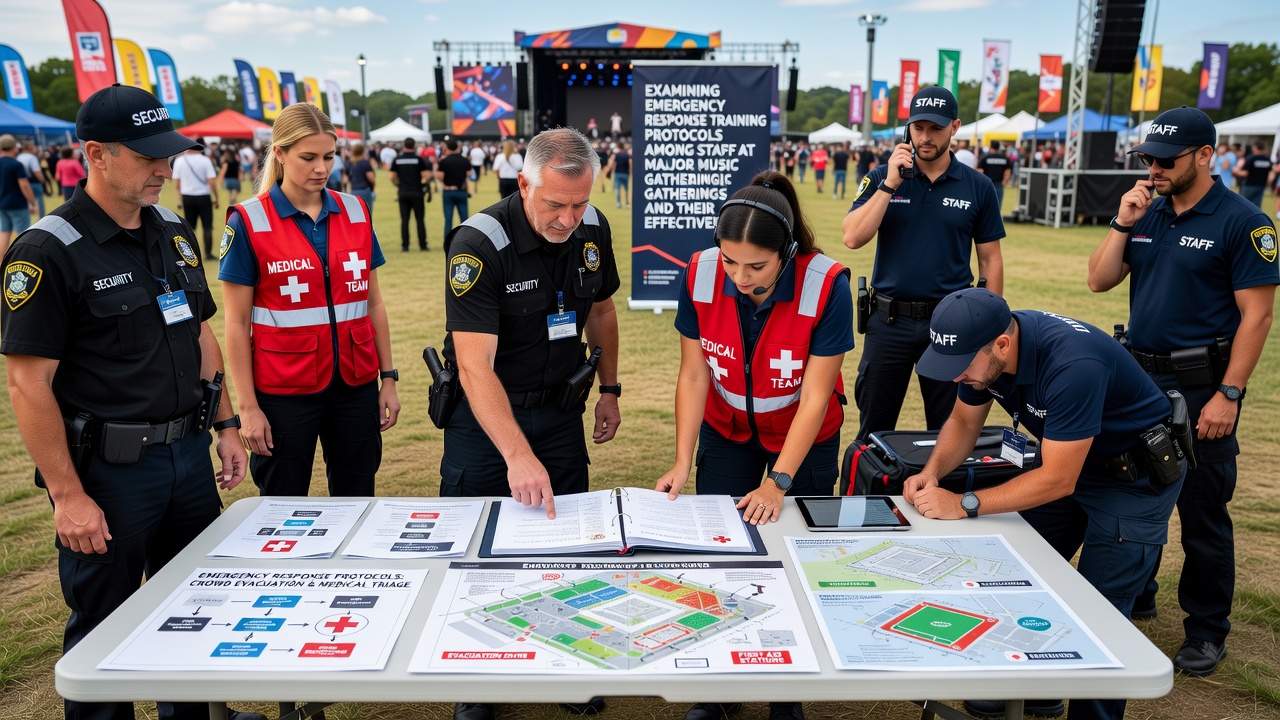
Coordination between venue security, on-site medical units, and external agencies forms another key element, since protocols often specify clear communication chains that reduce delays during multi-casualty situations. Figures from event reports indicate that festivals enforcing joint exercises with fire departments and ambulance services record lower rates of escalation for attendee injuries, while training modules also address accessibility needs for disabled participants during evacuations.
Documented Effects on Attendee Health and Safety Metrics
Studies examining festivals across North America and Europe reveal correlations between comprehensive staff training and reduced hospital transfers, with one analysis showing a 22 percent drop in severe outcomes at events where at least 80 percent of frontline personnel held updated certifications. Attendee surveys conducted post-event further demonstrate higher reported confidence in safety measures when visible staff demonstrate practiced responses rather than improvised actions.
Data from Australian music events highlights similar patterns, where protocols emphasizing rapid medical assessment teams led to improved recovery rates for concertgoers experiencing dehydration or panic episodes. Those who've reviewed longitudinal records observe that training focused on early intervention tends to limit the progression of minor incidents into larger crises, and this holds especially true during peak attendance hours when crowd density peaks.
Regional Variations and Recent Data Trends
North American organizers often integrate digital tools such as radio networks and real-time location tracking into training regimens, whereas European counterparts place greater emphasis on regulatory compliance with EU mass gathering directives. Canadian festivals have reported success with hybrid models that blend virtual reality simulations for rare events like structural failures alongside traditional drills, leading to documented improvements in staff decision-making speed during simulated high-pressure scenarios.
October 2026 brings renewed attention to these practices as several international conferences on event safety convene to share updated findings from the previous festival season. Observers note that preliminary datasets presented at these gatherings point to continued benefits when training incorporates climate adaptation elements, particularly for events scheduled during extreme heat periods that affect attendee vulnerability.
Case Examples from Large-Scale Events
One multi-day European festival adjusted its staff training after reviewing prior attendee outcome statistics and introduced mandatory mental health first aid modules alongside physical emergency responses. Subsequent seasons showed fewer instances of prolonged distress among participants, according to internal medical logs shared with researchers. In the United States, a major summer gathering partnered with local health departments to refine evacuation routes through repeated tabletop exercises, and records indicate shorter clearance times for areas affected by sudden weather changes.
These examples illustrate how targeted protocol refinements, when applied consistently, align with lower incidence rates of secondary complications among attendees who receive timely assistance. Staff retention of training content also plays a role, since refresher sessions scheduled closer to event dates help maintain readiness levels across volunteer and contracted teams alike.
Conclusion
Emergency response training protocols at major music gatherings continue to evolve through accumulated data on attendee outcomes, with measurable advantages appearing when programs emphasize practical drills, inter-agency coordination, and region-specific adaptations. As organizers prepare for upcoming seasons including the discussions planned for October 2026, ongoing examination of these practices supports refinements that address both common and emerging risks at large-scale events.